Friday, October 13, 2017

Black Sabbath's "Sabotage": Anger Provides Inspiration

Not all, but many Black Sabbath fans point to the phenomenal Sabotage as the Birmingham band's best album.

The interesting thing is how that progressive and doomy 1975 record was created: Out of turmoil, lawsuits and copious amounts of drugs.

Coming off their highly successful "Sabbath Bloody Sabbath" album, the band became immersed in a series of lawsuits (starting in 1974) while trying to split from former manager Patrick Meehan, who had been ripping off Sabbath members pretty much since Day 1. According to bassist Geezer Butler, Meehan was trying to stop them recording and attempting to freeze all their assets.

To put it in context, Tony Iommi, Ozzy Osbourne, Bill Ward and Geezer Butler were, then, just four lads from Birmingham who came from the poorest side of the tracks. Any cash they got up that point was gravy to them. They knew absolutely nothing about publishing rights and songwriting royalties. And they were taken with Meehan's charm and worldly knowledge. To his credit, he did take the band to the top, but stole a bunch of money along the way.

"Meehan talked a good talk," said Iommi. Osbourne has said publicly that "Patrick Meehan never gave you a straight answer when you asked him how much dough you were making."

Butler: "We felt like we were being ripped off"

And, as Butler said, "We felt we were being ripped off."

Hence Sabbath's decision to part ways with Meehan, but he wasn't about to relinquish control over his golden goose. That's when the litigation began.

The lawsuits were taking a toll, so much so, that writs and subpoenas would be handed out in London's Morgan Studios as Sabbath was working on the record.

"We used to turn up at the studio to go and write a song, and there would be like three lawyers waiting for us to put subpoenas on us, stuff like that," said Geezer Butler on bravewords.com. "It took us about ten months to do the album because of all the interruptions we were having."

Sabbath chose the title because they felt like all their efforts were being sabotaged, and the turmoil they were going through brought about an angry tone to the album, that hadn't really been on any of their previous work.

The nearly 10-minute track "Megalomania" is, lyrically, a song about the torment and frustration the band was going through because of Meehan.

With an evil, angry tone and a killer guitar riff, "Megalomania" is, indeed, like a "trip that's inside a separate mind" that explores going through hell and emerging with your freedom intact.

The Writ Takes Aim at Meehan

Then there's "The Writ", an ode to the writs coming at them in the studio. Osbourne's lyrics (yes he wrote them on that song, according to Butler), take square aim at Meehan ("Are you metal, are you man? You've changed a lot since you began. Yeah, began...You bought and sold me with your lying words...."), and Ozzy's manic vocals are full of fury. The end result is one of Sabbath's heaviest and best songs.

In his must-read book I am Ozzy, Osbourne describes what he was feeling as he penned the angry lyrics for "The Writ": "I wrote most of lyrics myself, which felt a bit like seeing a shrink. All the anger I felt towards Meehan came pouring out."

Despite all the strife and tension, Sabbath emerged with Sabotage, a brilliant album that set the table for thrash metal and has stood the test of time as one of their best records - indeed one of the best metal albums of all time.

Sabbath was able to sever the ties with Meehan, but they paid him out. Between that and the legal bills, there wasn't much cash left. But at least they were free.

Tuesday, September 26, 2017

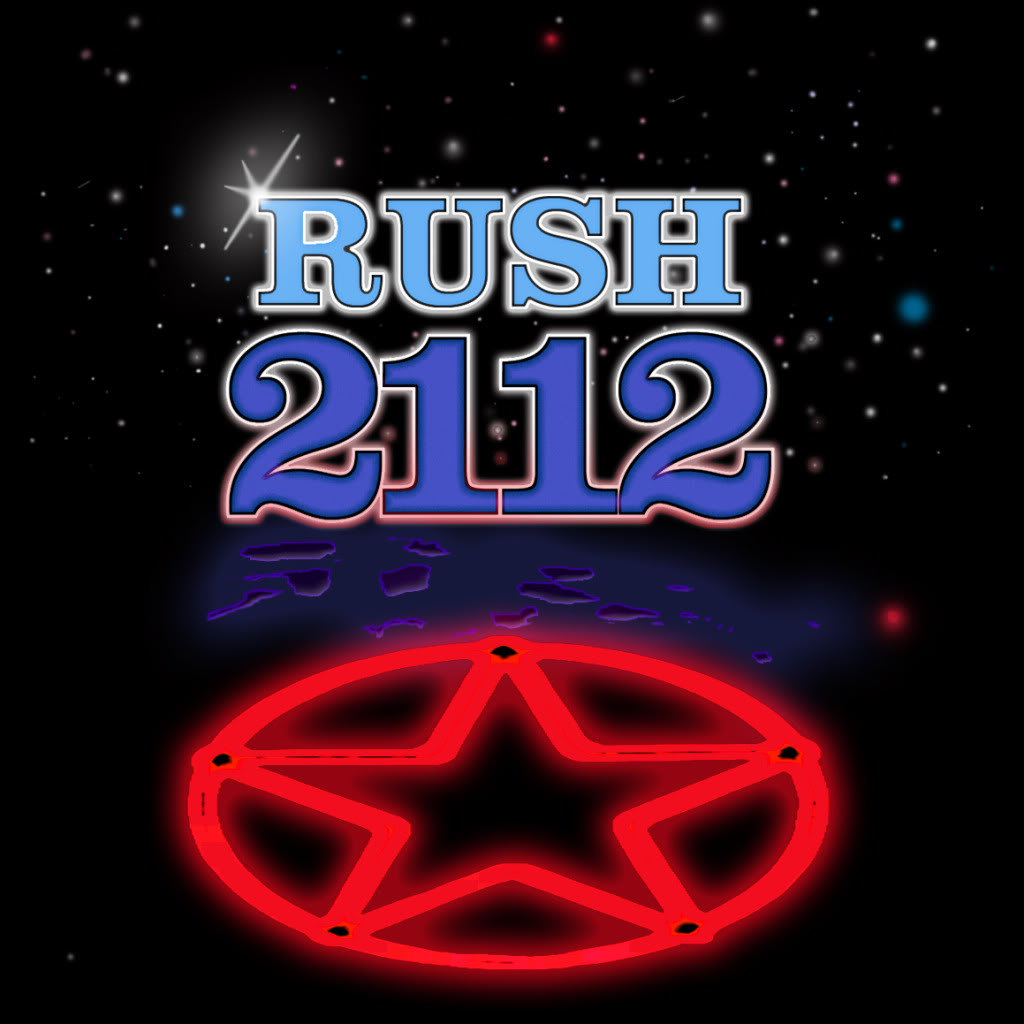
How the Individual Triumphed for Rush with 2112

For the Canadian power trio Rush, you could say their landmark album 2112 was not only the record that saved them from rock 'n roll oblivion, but it was also a testament to what a band can do when they stick to their guns.

It all starts back in late 1975-early 1976, following the disappointing sales of Caress of Steel, Rush's meandering, conceptual predecessor to 2112. Because it was a veritable commercial flop, drummer Neil Peart, bassist/vocalist Geddy Lee and guitarist Alex Lifeson were given an ultimatum from their record company back then, Mercury Records: Produce a hit album, or find another career path.

"There was a great deal of pressure on the band at that time from the record company, from management, to maybe take a couple of steps back and think about where (we're) going," said Lifeson.

In fact, the band's then-manager, Ray Daniels, and producer Terry Brown, had a meeting with the label, which had Cliff Burnstein (who now helps manage Metallica under his company Q Prime) working in marketing. They wanted to drop Rush from the label, but Daniels assured Mercury Records the Caress of Steel follow up would be more commercial and less of a concept album.

"We got out of Chicago with the deal intact for one more record, breathed a sigh of relief, and then it was up to Terry and the band what they were going to deliver," said Daniels, who later managed Van Halen and Extreme.

As for the members of Rush themselves, when they heard what was going down with the ultimatum from their label, they didn't cave. In fact, their reaction was to do what any self-respecting rock band would do.

"We got mad, you know. We got angry. We thought 'screw it. If this is our last shot, we're gonna do it. We're gonna do it our way'," said Peart. "I felt this great sense of injustice that this mass was coming down on us and telling us to compromise. Compromise was a word that I couldn't deal with. I was a child of the 60s.... an individualist."

This time they got it right with the concept about individualism vs collectivism in the epic title track, which filled the entire first side of the 2112 album. The second side is a collection of separate, but great, songs.

Many at Mercury Records Didn't Like 2112

However, when it was time for the record execs at Mercury to hear the album for the first time, they were less than impressed.

"Ray Daniels actually brought the record into Mercury and we all sat in the conference room and listened to it," recalled Burnstein. "The general feeling in the office was 'we're in trouble. This is exactly what we don't need'."

But for the band, it was very well-received by fans and music listeners, and, despite an ignorant backlash from mainstream media at the time regarding the idea of 2112, the album was a major hit, going multi platinum in both the U.S. and Canada.

2112 was the seminal album for Rush. It helped define their sound and it helped them move forward as musicians to build on their legacy which includes so many amazing albums like Hemispheres, Moving Pictures and Permanent Waves.

"2112 was the beginning of everything for us and, without which, nothing," said Peart.

The album is listed as the No. 22 greatest progressive rock album of all time according to a Rolling Stone Magazine list.

Check out another epic progressive rock album in Pink Floyd's Wish You Were Here: Absence and Disillusionment

Tuesday, September 12, 2017

Five of the Most Underrated Metallica Songs

To date, Metallica has released 10 studio albums and, along the way, have gained millions of new fans but lost a few on the way as well. Certainly Metallica has written many well known songs such as "Enter Sandman", "Master of Puppets" and "One", but among their vast catalogue are many jewels buried behind those more popular tracks. Here are five of Metallica's most underrated songs, which could be a 20-songs long (see playlist below):

The Call of Ktulu (From Ride the Lightning)

Found as the last song on Metallica's sophomore album, "The Call of Ktulu" blends dark atmosphere with melody and the bass-mastery of the late Cliff Burton. Coming in at 8:53, Ktulu is an instrumental that has to rank as one of the best metal instrumentals ever laid down. The song draws its inspiration from the pen of horror writer H.P. Lovecraft, who wrote of a mythical figure, Cthulhu, in the short story "The Call of Cthulhu". Metallica also use Cthulu as a muse for "The Thing that Should Not Be" and "Dream No More" off Hardwired. . . To Self Destruct.

The Outlaw Torn (from Load)

Crammed in as the last song from 1996's Load album is The Outlaw Torn, boasting a massive James Hetfield riff and some stellar bass playing from Jason Newsted. For "The Outlaw Torn", it's all about groove over speed, with an amazing vocal delivery of anguish from Hetfield, particularly during the chorus. Written by Hetfield and Lars Ulrich, it's only been played live 13 times to date (the S&M version is absolutely killer). Interestingly, Hetfield plays the outro solo, which has to fade out because it was too long for the 78 minutes of music a CD could store.

My Friend of Misery (from Metallica)

Granted the first time I heard "My Friend of Misery", I thought it was a throwaway song, filler for the Black Album. But after more and more listens, I came to realize it's a powerhouse, progressive track. It's got a fantastic groove for the verses with a really nice acoustic guitar part that's rather buried in the mix, which certainly adds to the feel. It also happens to be one of the few songs bassist Jason Newsted got credit for writing.

Fixxxer (from Reload)

A song Metallica has never played live, Fixxxer is found buried as the very last song on 1997's Reload album. However, it's worthy of being the second or third song on that record. On James Hetfield's handwritten lyrics from June 4, 1997, he actually titles it "The Fixxxer" and for him the lyrics are very personal, dealing with his childhood and parents ("Can you heal what father's done? Or fix this hole in a mother's son")and how alcohol numbs the pain of the "pins". Like "The Outlaw Torn", the song fades in, then slams you in the face with the main riff. It really is a shame Metallica has never played this song live.

Lords of Summer (from Hardwired. . . To Self Destruct)

Kind of lost on the latest Metallica album is "Lords of Summer", which opens the third side of the deluxe edition collection. Hetfield's riff, as usual, carries this galloping gem. It's a just a good, old-fashioned, straight-up Metallica song the band debuted in 2014 at a concert in Bogota, Colombia.


Metallica's Most Underrated Songs Playlist

Check out why James Hetfield wasn't a fan of Metallica's mid-1990s look


Tuesday, September 5, 2017

Playlist: Best of Iron Maiden (1980-1988)

Many of Iron Maiden's older fans consider their body of work from 1980-1988 as their finest era. From their first album to the brilliant Seventh Son of a Seventh Son, the band was at the peak of their powers whether it was with original singer Paul Di'Anno or Bruce Dickinson.

The following playlist highlights 32 of Maiden's biggest songs as well as some of the more underrated tracks like "To Tame a Land" from Piece of Mind. Check it out and Up the Irons!


Friday, August 11, 2017

The Bricks that Built Pink Floyd's "The Wall"

When you look at what it took to write and record Pink Floyd's The Wall, a double-album masterpiece, you really wonder how the band managed to keep it together without blowing up.

Released on Nov. 30 1979, and produced by Canadian Bob Ezrin, with mixed critical reaction at first, it soon topped the Billboard charts for some 15 weeks, and sold 3 million copies in the US by February, 1980. An amazing feat considering those involved in the year-long recording were at wits end and each other's throats.

And when you look back, much credit for getting it done goes to Canadian producer Bob Ezrin, who, like a good Canadian, played the ultimate peacekeeper.

From the outset it was Ezrin and Waters in charge of the album's direction. Ezrin actually moved the concept from the autobiographical nature Waters presented, to be more about the Pink character.

Ezrin was also the peace-maker between Waters and guitarist David Gilmour, whose relationship had really deteriorated by that point into near-constant fighting and a battle for power over the band's musical direction. As engineer Nick Griffiths later said of the Canadian producer:"Ezrin was very good in The Wall, because he did manage to pull the whole thing together. He's a very forceful guy. There was a lot of argument about how it should sound between Roger and Dave, and he bridged the gap between them."

Waters' Genesis of The Wall

The idea of creating a concept album a la rock opera was from the genius of Pink Floyd principal songwriter and bassist Roger Waters. The main idea of building a wall arose after Pink Floyd's 1977 In The Flesh tour supporting their Animals album. During the final show in Montreal on July 6, 1977 (there is raw audio out there on the internet) Waters spat on an audience member, a culmination of his frustration with crowds not paying attention to the quieter songs throughout the tour's run. This led him to realize he'd become alienated from Floyd's fan base and he manifested that alienation through the songs on The Wall, modelling the lead character after himself and Syd Barrett, the band's former co-founder and guitarist, who went haywire because of drug use. In fact "Nobody Home" is likely about Barrett with the references of "wild staring eyes" and "the obligatory Hendrix perm", among others.

The actual story of the songs and the progression of the main character, Pink, is modelled after Waters' life with his father getting killed in World War Two in the Battle of Anzio in Italy. Then he deals with an abusive school teacher, an overbearing mother, the breakdown of his marriage and a spiral into drugs, isolation and alienation. The wall of bricks becomes the metaphor for Waters isolating himself from the fans.

Even the original album cover, with just bricks and no sign of who wrote the album or what it's even called, is a means to distance the band from fans.

Work on the songs began at Britannia Row Studios in Islington, London (which was built by Pink Floyd) in July 1978, and it was there that the famous children's chorus from "Another Brick in the Wall (Part 2)" was recorded. That song was Floyd's first ever No. 1 hit. But then, like the Rolling Stones and others before, the Floyd had to seek tax exile, so they were forced out of England and recording continued in Nice, France, New York and Los Angeles.

Drummer Nick Mason's parts early on were recorded in a large open space on the top floor of Britannia Row. His drums were first recorded on 16 tracks, then mixed down and then copied onto a 24-track master to act as a guide for the rest of the band to play along with. Of note is the fact the late, great Jeff Porcaro (studio session drummer and Toto member) played drums on "Mother".

The idea for orchestral accompaniment on "Comfortably Numb", "The Trial" and "Nobody Home" came from Ezrin. Members of the New York Philharmonic and New York Symphony orchestras, as well as a choir from the New York Opera recorded the parts at CBS studios in New York under the guidance of Michael Kamen. No members of the band were on hand when those parts were laid down.

Bricks in the Wall

Regarding "Comfortably Numb", the song was born out of the sessions for Gilmour's first solo record (self titled and released in 1978). The popular track became the source of huge blowup between Waters and Gilmour. According to Ezrin, the song germinated as "Roger's record, about Roger, for Roger". And Waters though it needed more work. So Waters rewrote the song and added more lyrics for the chorus, but Gilmour hated Waters' "stripped-down and harder" version. The guitarist wanted no orchestration in the body of the song, while Waters and Ezrin did. Following a full-scale argument in a North Hollywood restaurant, the two compromised – the song's body eventually included the orchestral arrangement, with Gilmour's second and final guitar solo standing alone. As Gilmour noted after the fact "I think things like "Comfortably Numb" were the last embers of mine and Roger's ability to work collaboratively together."

With Waters taking his place as the de facto band leader at this time, he wrote or co-wrote every song on The Wall, with Gilmour getting credit on "Comfortably Numb", "Young Lust" and "Run Like Hell". Ezrin received writing credit on "The Trial". In fact Waters had written enough songs to fill three albums, and many of those tracks not used on "The Wall" went onto The Final Cut.

It should be noted Ezrin was a huge fan of Gilmour and lobbied hard to get his material included on the record where there were holes in the story Waters set out.

"I really lobbied to fill it with Gilmour material, because my feeling was, at that point, we were one-sided musically," recalled Ezrin. "We were really missing the Gilmour influence and his heart. We had a lot of Roger’s angst and intellect, but we were missing the visceral Gilmour heart and swing. So then we started filling in the holes with Gilmour’s stuff. When there were certain holes left in the script, it would say, ‘To be written.’"

During the nearly year-long recording process, Water and keyboardist Richard Wright would have a major falling out that led to the latter being fired from the band. He received no credit on the original album release and was after-the-fact hired as a basic studio musician by the band.

Ezrin recalls how Waters was very tough on the keyboard player: "Rick was looking for respect from Roger and a sense that he was a valued member of the band. He was definitely feeling Roger becoming more and more distant from him. He was becoming insecure about his role. He had good reason to be. Roger was particularly hard on him". And Gilmour recalls Wright wasn't bringing much to the table back then.

In advance releasing the album, technical constraints led to some changes being made to the running order and content of The Wall, with "What Shall We Do Now?" being replaced by the similar but shorter "Empty Spaces", and "Hey You" being moved from its original place at the end of side three, to the beginning. Interestingly, with the November 1979 deadline quickly approaching, the band left the now-incorrect inner sleeves of the album unchanged.

After almost a year of recording and mixing, the band was under some pressure from their record label, CBS in the US and Harvest in the U.K., to get the album out for a Christmas release.

The Wall has since sold some 40 million copies worldwide and taken its place in music history as one of the greatest rock albums ever made.

Check out our look at how Pink Floyd made Wish You Were Here